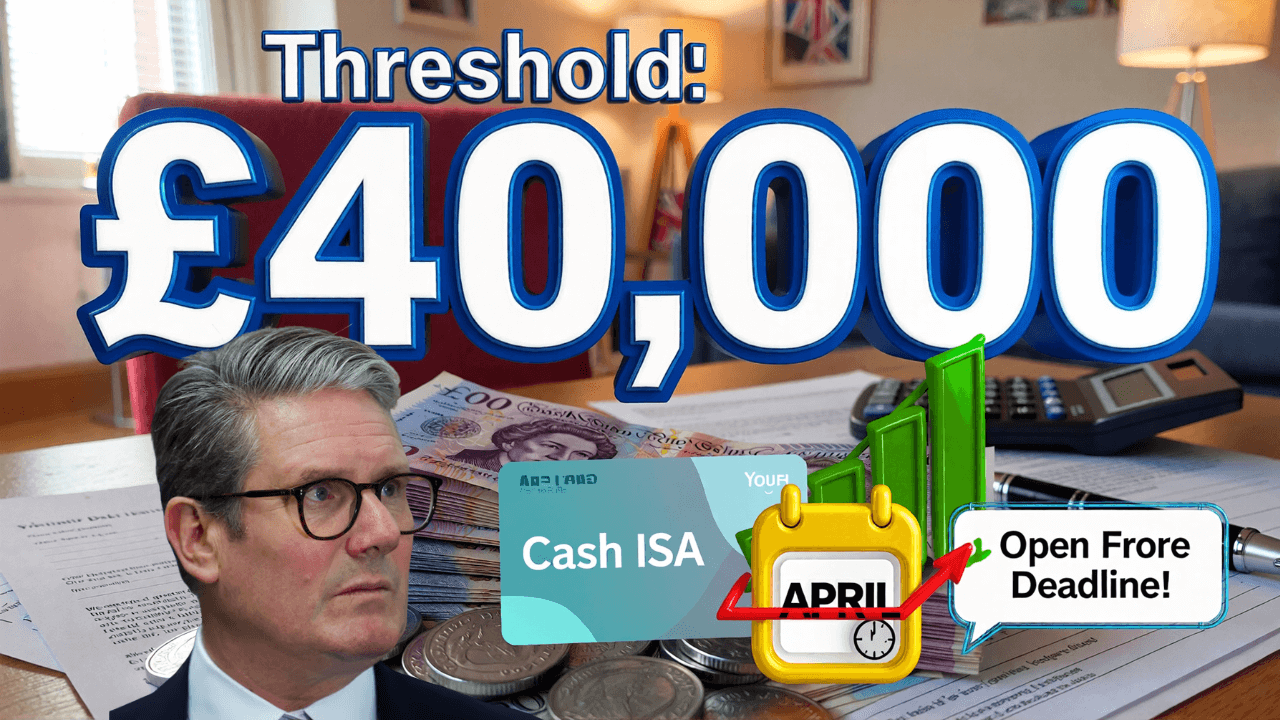
With the end of the tax year fast approaching, many savers across the UK are taking a closer look at their finances. One deadline in particular tends to focus minds: 5 April. Miss it, and you lose this year’s ISA allowance forever.
For anyone hoping to build up tax‑free savings of up to £40,000 across two tax years, opening or topping up a Cash ISA before April can be a smart move. With interest rates still competitive compared to recent years, there’s a real opportunity to make your money work harder — without handing a portion of your returns to the taxman.
Here’s everything you need to know about Cash ISAs, the £20,000 annual limit, and how to choose the best option before the deadline.
What Does £40,000 Tax‑Free Really Mean
Each UK adult has an Individual Savings Account (ISA) allowance of £20,000 per tax year.
The tax year runs from 6 April to 5 April the following year.
If you use your full £20,000 allowance this tax year and then contribute another £20,000 after 6 April in the new tax year, you could have £40,000 sitting inside ISAs — fully protected from income tax on the interest earned.
The key point is this: ISA allowances do not roll over. If you don’t use this year’s allowance by 5 April, it’s gone for good.
What Is a Cash ISA
A Cash ISA is a savings account that allows you to earn interest without paying income tax on those earnings.
It works similarly to a standard savings account, but with the added benefit of tax protection.
You can open a Cash ISA if you:
Are aged 18 or over
Are a UK resident (for tax purposes)
Have not exceeded your annual ISA limit
You can split your £20,000 allowance across different types of ISAs, including Stocks and Shares ISAs, but the combined total cannot exceed the annual cap.
Why the April Deadline Matters
As 5 April approaches, banks and building societies often see a surge in ISA applications.
That’s because:
Unused allowance expires
Rates can change at short notice
Tax planning becomes urgent
Even depositing a small amount into an ISA before the deadline secures your account for that tax year.
You can then add more funds later (up to the annual limit) before 5 April.
How Much Tax Do You Actually Save
Basic rate taxpayers currently have a Personal Savings Allowance that allows them to earn up to £1,000 in savings interest tax‑free.
Higher rate taxpayers have a £500 allowance.
Additional rate taxpayers receive no Personal Savings Allowance.
If your savings generate interest above those thresholds, tax may apply.
A Cash ISA removes that concern completely — all interest earned inside the ISA is tax‑free, regardless of how much you earn.
Fixed vs Easy Access Cash ISAs
There are two main types of Cash ISA to consider before the deadline.
Easy Access ISA
Allows withdrawals at any time.
Offers flexibility.
May offer slightly lower interest rates.
Fixed Rate ISA
Locks your money away for a set period (often one, two or five years).
Usually offers a higher interest rate.
Penalties apply for early withdrawal.
Choosing between them depends on whether you need quick access to your savings.
Is Now a Good Time to Open a Cash ISA
Interest rates have been higher than the ultra‑low levels seen a few years ago.
That means savers can now secure competitive fixed rates or attractive easy access deals.
If rates fall later in the year, locking in a strong fixed rate before April could prove beneficial.
On the other hand, if you expect to need flexibility, an easy access ISA may provide peace of mind.
Can You Transfer an Existing ISA
Yes.
If you already have a Cash ISA earning a low rate, you can transfer it to a better deal without losing tax‑free status.
The key rule: always use the official ISA transfer process. Do not withdraw the funds yourself, or you could lose the tax protection.
Most providers handle transfers on your behalf.
Who Benefits Most from a Cash ISA
Cash ISAs can be especially useful for:
Higher rate taxpayers
Additional rate taxpayers
Those with large savings balances
People planning long‑term saving
Retirees managing lump sums
Even basic rate taxpayers may benefit if savings grow over time and exceed the Personal Savings Allowance.
Building £40,000 Tax‑Free Over Two Years
Let’s look at a simple example.
If you deposit £20,000 before 5 April this year, and then another £20,000 after 6 April in the new tax year, you will have £40,000 inside ISAs.
Assume an interest rate of 4.5 percent.
On £40,000, that would generate £1,800 per year in interest.
In a taxable account, part of that interest could exceed your Personal Savings Allowance, depending on your tax band.
Inside a Cash ISA, all of it remains tax‑free.
What Happens If You Miss the Deadline
If you do not use your allowance before 5 April, you lose that year’s £20,000 allowance permanently.
You cannot “catch up” later.
That’s why many financial advisers encourage at least opening and funding an ISA with a small amount before the tax year ends.
Are There Any Risks
Cash ISAs are generally considered low risk.
Your money is usually protected under the Financial Services Compensation Scheme (FSCS) up to £85,000 per person per institution.
However, fixed‑rate ISAs limit access to your funds during the term.
It’s important to ensure you have emergency savings elsewhere if you choose to lock money away.
Cash ISA vs Savings Account
At first glance, a top easy access savings account may offer a similar rate to a Cash ISA.
The difference is tax treatment.
If your interest pushes you above the Personal Savings Allowance, a standard savings account could lead to tax deductions.
A Cash ISA shields your returns completely.
Pensioners and Cash ISAs
For retirees who have withdrawn lump sums from pensions, Cash ISAs can be a useful way to shelter savings from tax.
Even if your total income is below the Personal Allowance threshold, growing savings over time could create taxable interest in the future.
Using ISAs each year helps build a tax‑efficient savings pot.
Couples and ISA Strategy
Each adult has their own £20,000 allowance.
That means a couple could shelter £40,000 per year between them.
Over two tax years, that’s potentially £80,000 protected from tax.
Planning as a household can significantly increase long‑term tax efficiency.
How to Choose the Best Cash ISA
When comparing options, look at:
Interest rate (AER)
Fixed or variable terms
Withdrawal flexibility
Transfer rules
Provider reputation
Rates can change quickly near the tax year end, so acting sooner rather than later can secure a competitive deal.
Steps to Open Before April
Opening a Cash ISA is usually straightforward:
Compare available deals
Apply online or in branch
Deposit funds before 5 April
Keep confirmation of your subscription
Even depositing a small amount secures your ISA for the current tax year.
Avoiding Common Mistakes
Some savers accidentally:
Exceed the £20,000 annual limit
Open multiple ISAs without tracking contributions
Withdraw funds incorrectly instead of transferring
Keeping clear records avoids problems.
The Bigger Financial Picture
While Cash ISAs offer security and tax efficiency, they may not always provide the highest long‑term growth compared to investment‑based ISAs.
However, for short‑ to medium‑term savings goals, emergency funds or risk‑averse savers, they remain a popular choice.
Balancing flexibility, interest rates and tax efficiency is key.
Key Points to Remember
You have a £20,000 ISA allowance per tax year.
Unused allowance expires on 5 April.
Interest earned in a Cash ISA is tax‑free.
Fixed ISAs offer higher rates but limit access.
Couples can double their annual allowance.
Final Thoughts
The countdown to the April tax deadline often prompts last‑minute financial decisions — but opening a Cash ISA before 5 April can be a sensible and forward‑thinking move.
Whether you aim to build £40,000 tax‑free across two tax years or simply want to protect your savings from unexpected tax bills, acting before the deadline ensures you don’t lose this year’s allowance.
Even a modest contribution now can lay the foundation for long‑term, tax‑efficient savings. And in a climate where every pound counts, keeping more of your interest could make a meaningful difference to your financial future.