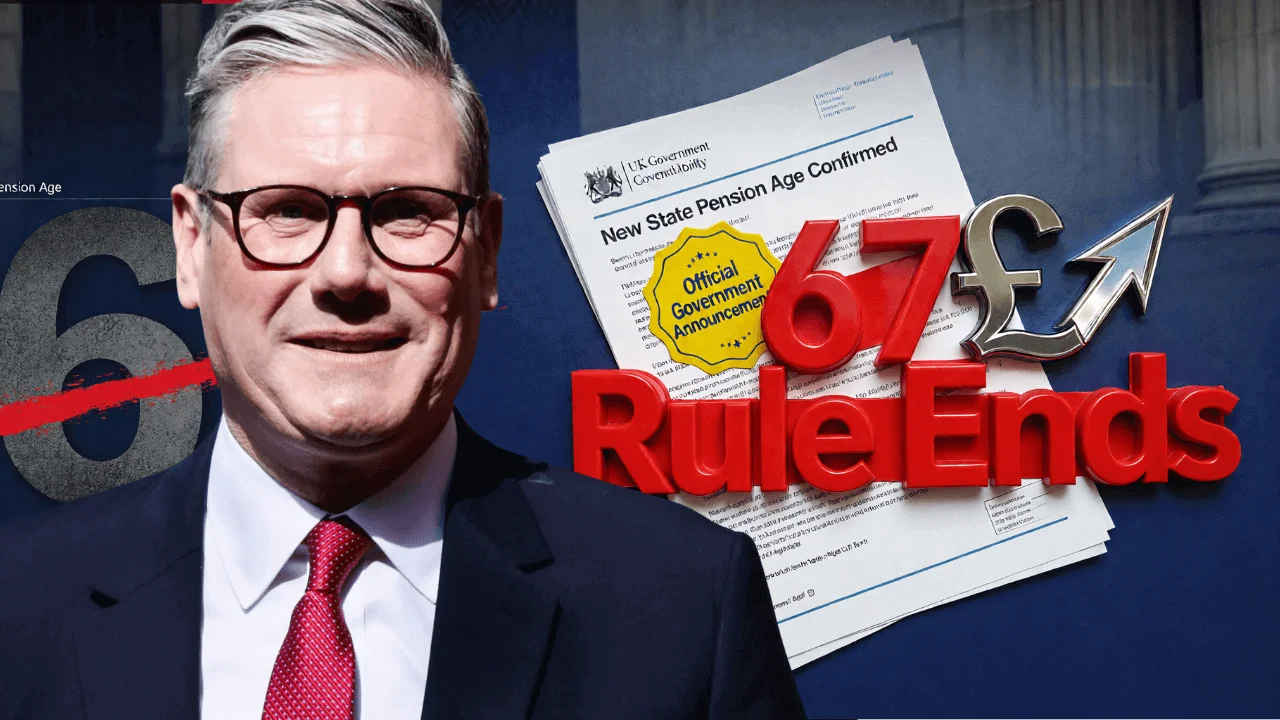
For years, many people in the UK have planned their retirement around the idea of stopping work at 67. That age has become a benchmark — a target circled on calendars and built into financial plans. But with the government officially confirming changes to the State Pension age framework, the reality of retiring at 67 is no longer guaranteed for everyone.
The shift reflects wider changes in life expectancy, public finances and the long‑term sustainability of the pension system. While some people will still retire at 66 or 67 depending on their date of birth, others may need to wait longer before receiving their State Pension.
Here is a clear and practical guide to what has been announced, who is affected and what this means for your retirement plans.
The Current State Pension Age
The State Pension age has gradually increased over the past two decades.
At present:
The State Pension age is 66 for both men and women.
It is scheduled to rise to 67 between 2026 and 2028.
Further increases have already been legislated beyond that.
These changes were designed to reflect longer life expectancy and to ensure the pension system remains affordable in the long term.
What Has Now Been Announced
The UK Government has confirmed that future increases to the State Pension age will proceed in line with existing legislation and long‑term demographic forecasts.
This means that retiring at 67 will not apply to everyone. For younger generations, the State Pension age is expected to rise beyond 67 in the coming years.
Under current legislation:
The State Pension age is due to rise to 68.
The timeline for that increase may be reviewed periodically.
The announcement signals that the era of retiring at 67 as a fixed expectation is coming to an end for many future retirees.
Why the Pension Age Is Rising
The decision is linked to several factors.
Life expectancy has increased significantly over recent decades.
More people are living longer in retirement.
The ratio of working‑age people to pensioners is falling.
Public finances face long‑term pressure.
The government argues that without adjustments, the cost of funding pensions would place unsustainable strain on taxpayers.
The Department for Work and Pensions has repeatedly stated that maintaining fairness between generations requires gradual increases in pension age.
Who Will Be Affected
The impact depends largely on your date of birth.
If you are already receiving your State Pension, nothing changes.
If you are in your late 50s or early 60s, you are likely already aware of your confirmed pension age.
Younger workers — particularly those in their 30s and 40s — are the most likely to face a State Pension age of 68 or possibly higher in the future.
It is important to check your individual pension age using the official government calculator rather than relying on assumptions.
What This Means for Retirement at 67
For some, 67 will still be the retirement milestone.
For others, especially younger workers, it may no longer apply.
This does not mean you cannot stop working at 67. It simply means you may not receive your State Pension until a later age.
Many people choose to retire earlier using:
Workplace pensions
Private pensions
Savings and investments
The State Pension age determines when government pension payments begin — not when you are legally allowed to retire.
The Difference Between Retirement and Pension Age
It is important to separate two concepts:
Retirement age — when you stop working
State Pension age — when you begin receiving the State Pension
You can retire before reaching State Pension age, but you must fund that period using other income sources.
Conversely, you can continue working even after you begin receiving the State Pension.
Financial Planning Implications
The announcement reinforces the need for forward planning.
If your State Pension age increases to 68, you may need to cover an additional year (or more) of living costs before government payments begin.
This could involve:
Boosting workplace pension contributions
Building personal savings
Reviewing investment strategies
Considering phased retirement options
Understanding your projected pension age is a key step in building a realistic retirement plan.
Workplace and Private Pensions
Most workplace pensions allow access from age 55 (rising to 57 in 2028).
This gives flexibility for those who wish to retire before receiving their State Pension.
However, withdrawing funds earlier may reduce long‑term income levels.
Balancing early access with sustainability is crucial.
Life Expectancy and Policy Reviews
The State Pension age is periodically reviewed to reflect demographic trends.
If life expectancy continues to rise, further increases may be considered in the long term.
However, future changes require parliamentary approval and are usually announced well in advance.
The aim is to give people time to adjust their financial planning.
Impact on Different Generations
Older workers close to retirement are unlikely to see further changes beyond what has already been legislated.
Middle‑aged workers should check their expected pension age and review their savings plans.
Younger workers entering the workforce today should assume that the State Pension age could be 68 or higher by the time they retire.
This does not remove the State Pension, but it shifts the timeline.
Public Reaction
Reaction to the announcement has been mixed.
Some argue that rising life expectancy justifies later retirement.
Others point out that not all jobs are physically sustainable into the late 60s.
Manual workers and those in demanding roles may find extended working lives more challenging.
These debates are likely to continue as pension policy evolves.
Is the State Pension Being Cut
No.
The change concerns the age at which you receive the pension — not the value of the pension itself.
Annual uprating policies remain in place under existing frameworks.
The structure of payments continues as before.
Checking Your State Pension Age
You can check your individual State Pension age through official GOV.UK tools.
This will provide:
Your exact pension age
The date you will reach it
Your forecast entitlement
Relying on outdated assumptions could lead to planning gaps.
Planning for a Later Pension Age
If your State Pension age is later than expected, consider:
Increasing pension contributions while still working
Paying voluntary National Insurance contributions if you have gaps
Reducing high‑interest debts before retirement
Exploring flexible working arrangements in later years
Even small adjustments made early can have a significant impact over time.
The Bigger Picture
The State Pension remains one of the foundations of retirement income in the UK.
However, demographic change means the system must adapt.
As people live longer and healthier lives, governments face difficult choices about balancing affordability with adequacy.
The confirmation that retiring at 67 will not apply universally marks another step in that long‑running adjustment.
Key Points to Remember
The State Pension age is currently 66.
It is rising to 67 between 2026 and 2028.
It is scheduled to rise to 68 in the future.
Not everyone will retire at 67.
Your personal pension age depends on your date of birth.
Final Thoughts
The idea of retiring at 67 has shaped retirement expectations for years. But as the UK adapts to demographic and economic realities, that milestone is shifting for many people.
For some, nothing changes. For others — particularly younger generations — the State Pension age will come later than previously assumed.
The key message is preparation. Check your official pension age, review your savings strategy and adjust your plans accordingly.
Retirement remains achievable — but understanding when your State Pension begins is now more important than ever.