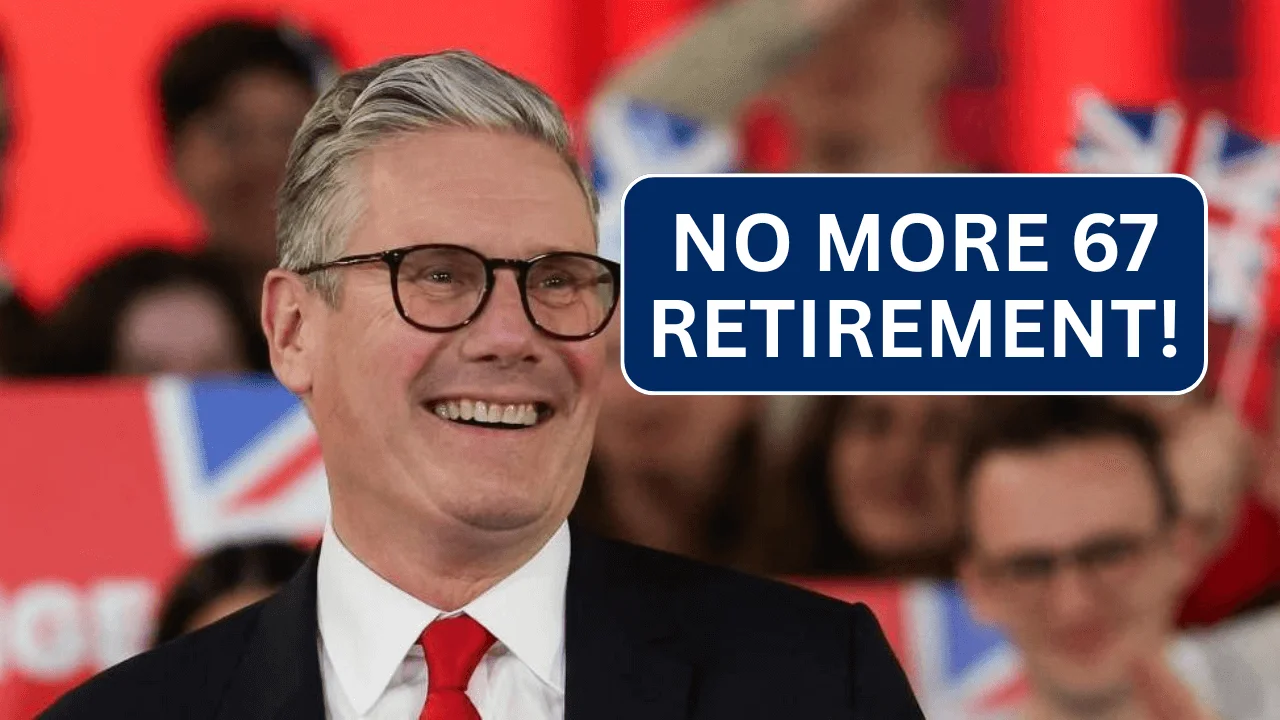
For years, many people across the UK have worked with one clear figure in mind: 67. That was widely understood to be the age at which most people would begin receiving their State Pension. But that long‑standing expectation is now shifting.
The UK Government has officially approved changes to the State Pension age framework, meaning retiring at 67 will no longer be the standard benchmark for future generations. While current pensioners will not be affected, millions of workers still in employment may need to rethink their retirement timelines.
This is not an overnight change, and it is not a sudden removal of pension rights. However, it does represent a significant step in the ongoing reform of the UK retirement system. Here’s what you need to know, explained clearly and practically.
What Is the State Pension Age
The State Pension age is the earliest age at which you can claim the State Pension.
It applies to both men and women and has gradually increased over the past decade. Historically, women could claim earlier than men, but that difference was phased out. The qualifying age then rose from 65 to 66 and was scheduled to rise to 67.
Now, with new approval in place, the Government has confirmed that the age will not remain fixed at 67 in the long term.
Why Retiring at 67 Is No Longer Guaranteed
The phrase “goodbye to retiring at 67” reflects the Government’s decision to move forward with the next stage of State Pension age increases.
While 67 remains the qualifying age for many current workers, younger generations should not assume this will be their retirement point. The State Pension age is expected to rise further, potentially to 68 and beyond, depending on birth year.
This shift is part of a long‑term strategy rather than a sudden policy change.
Why the Pension Age Is Rising
There are several key reasons behind the increase.
Life expectancy has improved significantly over recent decades. People are living longer and spending more years in retirement.
At the same time, the proportion of working‑age people supporting retirees through taxation is shrinking. With fewer workers funding more pensioners, the system faces financial pressure.
By gradually increasing the State Pension age, the Government aims to keep the pension system sustainable for future generations.
Who Will Be Affected
The impact depends on your date of birth.
If you are already receiving the State Pension, nothing changes for you.
If you are in your early 60s, your pension age may already be set at 66 or 67.
Those currently in their 40s or 50s are more likely to see their State Pension age rise above 67.
Younger workers may experience the greatest shift under future reviews.
Checking your individual State Pension age through official GOV.UK tools is the best way to confirm your position.
Is the Change Immediate
No.
Changes to the State Pension age are always phased in gradually over several years. There is no overnight jump.
The legislation provides advance notice, allowing individuals time to adjust retirement plans.
This means people will not suddenly discover their pension age has moved without warning.
What This Means for Retirement Planning
For many people, the State Pension forms a foundation rather than the entirety of retirement income.
If your State Pension age increases, you may need to:
Work longer than originally planned
Increase private pension contributions
Bridge the gap with savings
Consider phased retirement
Planning early gives you more flexibility later.
The Role of Private Pensions
Private and workplace pensions are separate from the State Pension.
Most private pensions can be accessed before the State Pension age, depending on scheme rules.
However, drawing private pensions earlier can reduce long‑term retirement income. If the State Pension age rises, private savings may need to stretch further.
This makes reviewing your pension contributions and retirement projections especially important.
What Happens to the Pension Amount
The age change does not automatically alter how much the State Pension pays.
Payment levels are reviewed annually under the triple lock system, which increases pensions based on:
Inflation
Average earnings growth
Or 2.5 percent, whichever is highest
Eligibility age and payment value are separate policy decisions.
Why Longevity Matters
When the State Pension was introduced decades ago, average life expectancy after retirement was much lower.
Today, many people spend 20 to 25 years in retirement.
This longer retirement period increases the overall cost of pension provision.
Raising the pension age spreads that cost more evenly across generations.
What If You Cannot Work Longer
Not everyone can continue working into their late 60s.
Those facing health challenges may qualify for other forms of support, such as:
Employment and Support Allowance
Universal Credit
Personal Independence Payment
These benefits operate under separate eligibility rules.
The State Pension age increase does not remove access to other support systems.
Common Concerns
Many people have raised concerns about fairness.
Manual workers and those in physically demanding jobs may find it harder to extend working life.
There are also regional differences in life expectancy, meaning not everyone benefits equally from longer average lifespans.
Policymakers argue that gradual increases, with years of notice, provide time to prepare. Critics argue more targeted solutions may be needed.
How to Check Your Pension Age
The most reliable way to understand your situation is to check your personal State Pension forecast.
This allows you to see:
Your qualifying age
Your expected weekly payment
Your National Insurance contribution record
Understanding these details helps you plan realistically.
Practical Steps to Take Now
If you are in your 40s, 50s or early 60s, consider:
Reviewing your pension savings
Increasing contributions where possible
Checking your National Insurance record
Exploring workplace pension options
Considering flexible retirement strategies
Even small adjustments made early can have a meaningful impact later.
Rethinking Retirement Expectations
The idea of a fixed retirement age is becoming less common.
Many people are now choosing phased retirement, combining part‑time work with pension income.
Others are delaying full retirement voluntarily to increase pension payments.
Longer life expectancy can offer opportunities as well as challenges, including extended active years.
What Stays the Same
Despite the headline change, several key elements remain unchanged.
The State Pension still exists as a core retirement benefit.
It is still based on National Insurance contributions.
It is still paid for life once claimed.
It is still reviewed annually.
The system is evolving, not disappearing.
The Bigger Picture
The UK is not alone in raising retirement ages. Many developed countries are making similar adjustments due to demographic shifts.
An ageing population combined with lower birth rates creates pressure on public finances.
Gradual pension age increases are seen by governments as one way to balance sustainability with fairness.
Key Points to Remember
Retiring at 67 will not remain the long‑term standard.
Future generations may face a higher qualifying age.
Changes are phased and not immediate.
Current pensioners are not affected.
Early planning provides greater flexibility.
Final Thoughts
Saying goodbye to retiring at 67 may feel unsettling, especially for those who have built retirement plans around that number. However, the shift reflects long‑term demographic realities rather than a sudden withdrawal of support.
For many workers, the most important step is awareness. Knowing your personal State Pension age, reviewing your savings strategy and staying informed about future reforms can help you remain in control of your retirement journey.
Retirement in the UK is evolving. With thoughtful planning and realistic expectations, it is still possible to build a secure and stable future — even if the finish line moves slightly further ahead.